Research
& Impact
A Community-Engaged
Research Model
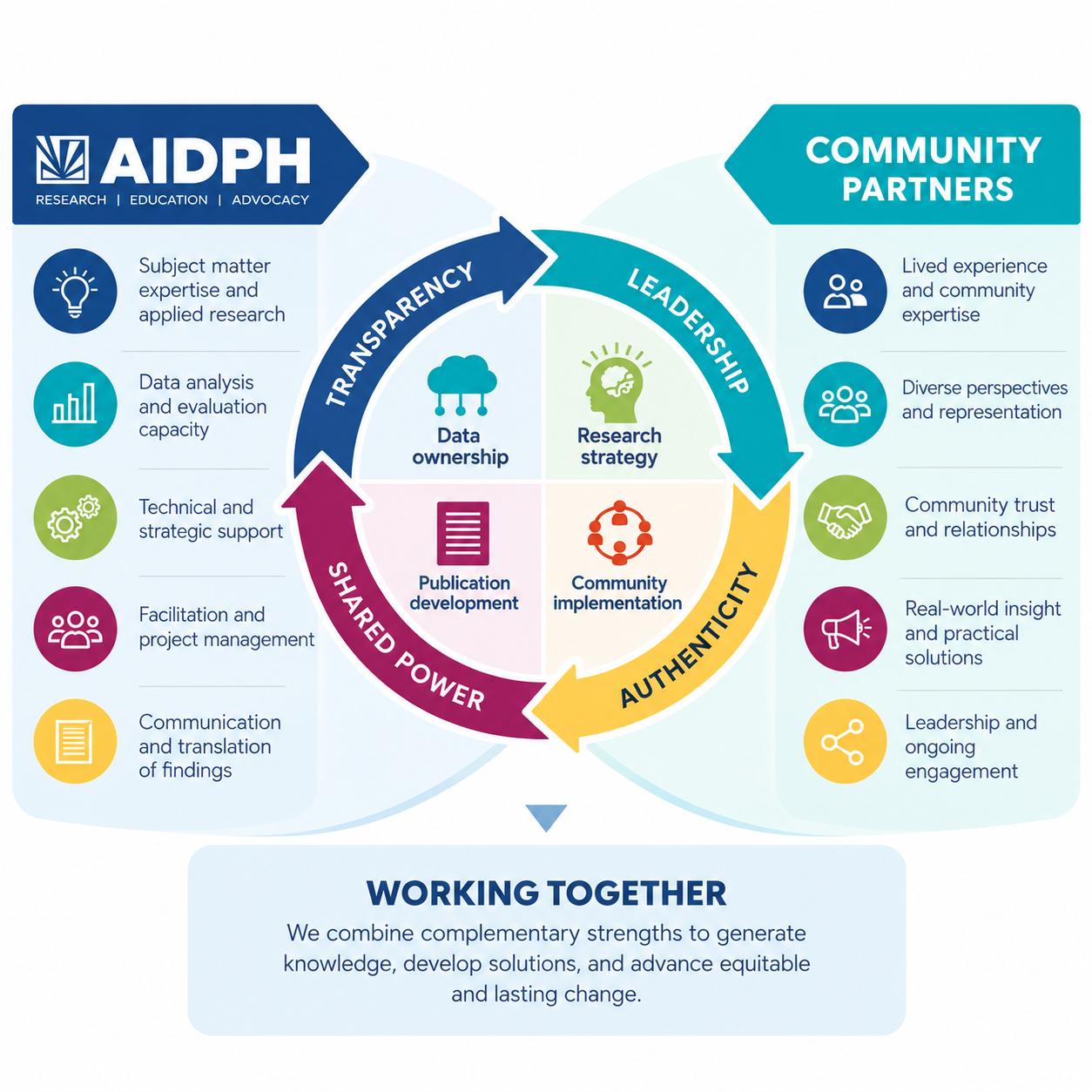
To authentically demonstrate shared investment and equitable power dynamics with our research partners, AIDPH employs a community-engaged research model. This method integrates the knowledge, expertise, technical skills, and research capacity of AIDPH with the lived experiences, established trust, and representation from the communities directly benefiting including support from our Oral Health Community Advisory Board. Through this collaborative approach, our community research partners actively co-design research strategies, co-own the collected data, contribute to publications, and receive support for implementing community-driven initiatives.

Building Our Capacity for Community Engagement
Funding from the Patient-Centered Outcomes Research Institute supported AIDPH’s capacity to engage in patient-centered CER, develop a community advisory board, and generate a national roadmap for community-engaged research.

New from AIDPH: A National Oral Health Research Agenda
AIDPH has developed a national research agenda and call to action for the oral health community. Developed collaboratively by the AIDPH’s Oral Health Community Advisory Board and the Oral Health Community Engaged Research Task Force (OHCER), this publication features national survey research that informed more than 80 research questions and priorities for patient-centered CER and community-engaged research in oral health.
The purpose of this report is to outline a community-developed national research agenda for oral health. The primary aims include:
- Provide clear, actionable strategies for building patient-centered CER through community-engaged oral health research.
- Create a launching point for clinical, population, and community-based oral health research that reduces disparities and improves health outcomes.
- Establish a framework for meaningful and equitable engagement in CER, particularly for rural communities, veterans, LGBTQIA+ individuals, and people with disabilities.
Areas of Research Focus
Veterans

A profound lack of access and resulting disparity drives AIDPH to respond with a multi-faceted approach to advancing equitable oral health for veterans.
LGBTQIA+ People

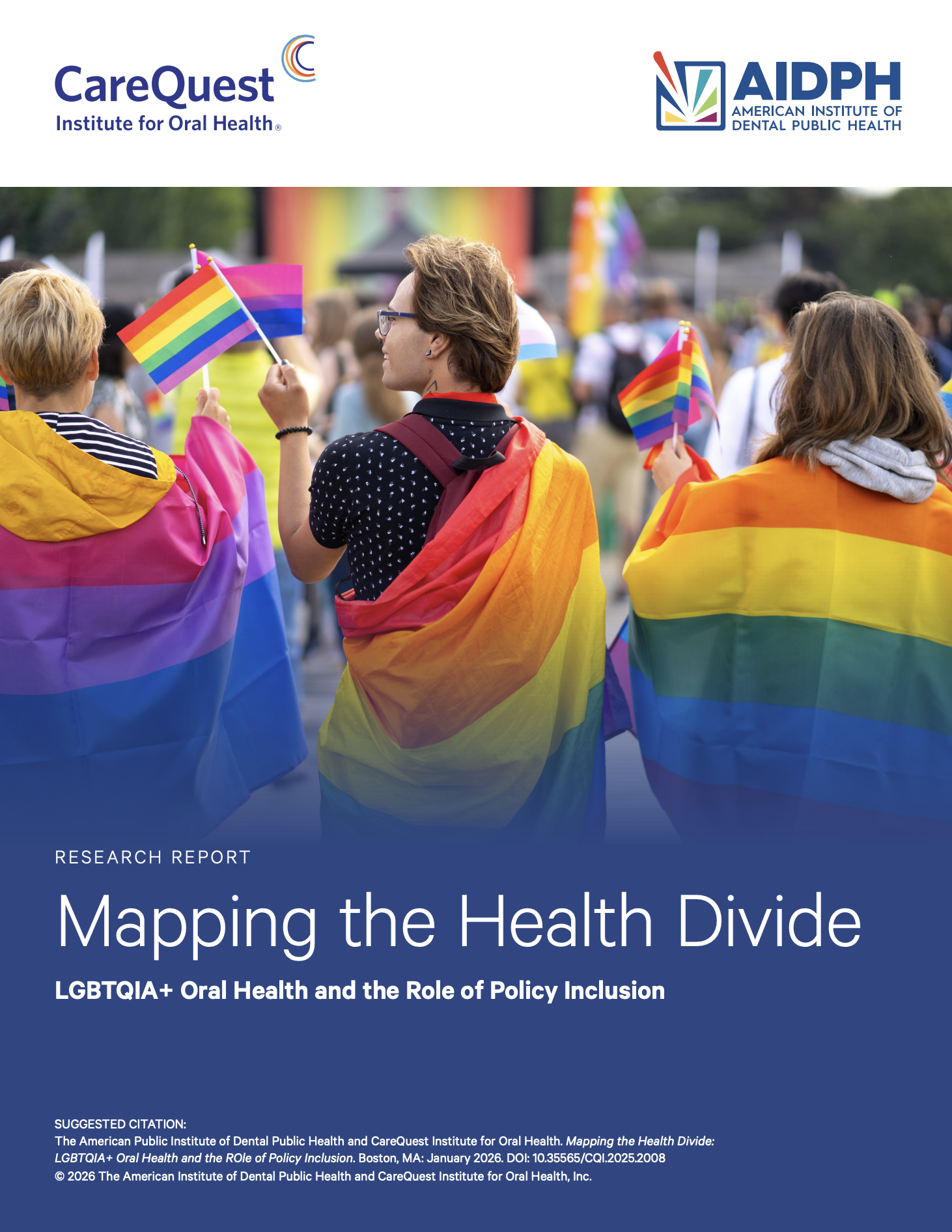
AIDPH’s research looked at oral health access and outcomes for LGBTQIA+ people and ways providers and educators can improve knowledge, comfort, and attitudes for this group.
Rural Communities

AIDPH is committed to bridging the vast oral health divide that leaves those living in rural communities underserved and overlooked.
People With Disabilities

Recognizing that disabilities can vary widely in type and presentation, AIDPH prioritizes inclusive research and education initiatives designed to break down barriers and tailor care to individual needs.
Workforce Development

AIDPH has developed programming and scientific activities to grow and develop the oral health workforce. We rely on research that informs evidence-based strategies for clinical excellence and culturally affirming care.
Policy Research

AIDPH lets the research drive our policy process. We believe in results-driven strategies for “little p policy” (organization and systemic policies) and “Big P Policy” (legislation) to address pervasive health disparities.
Recent Publications
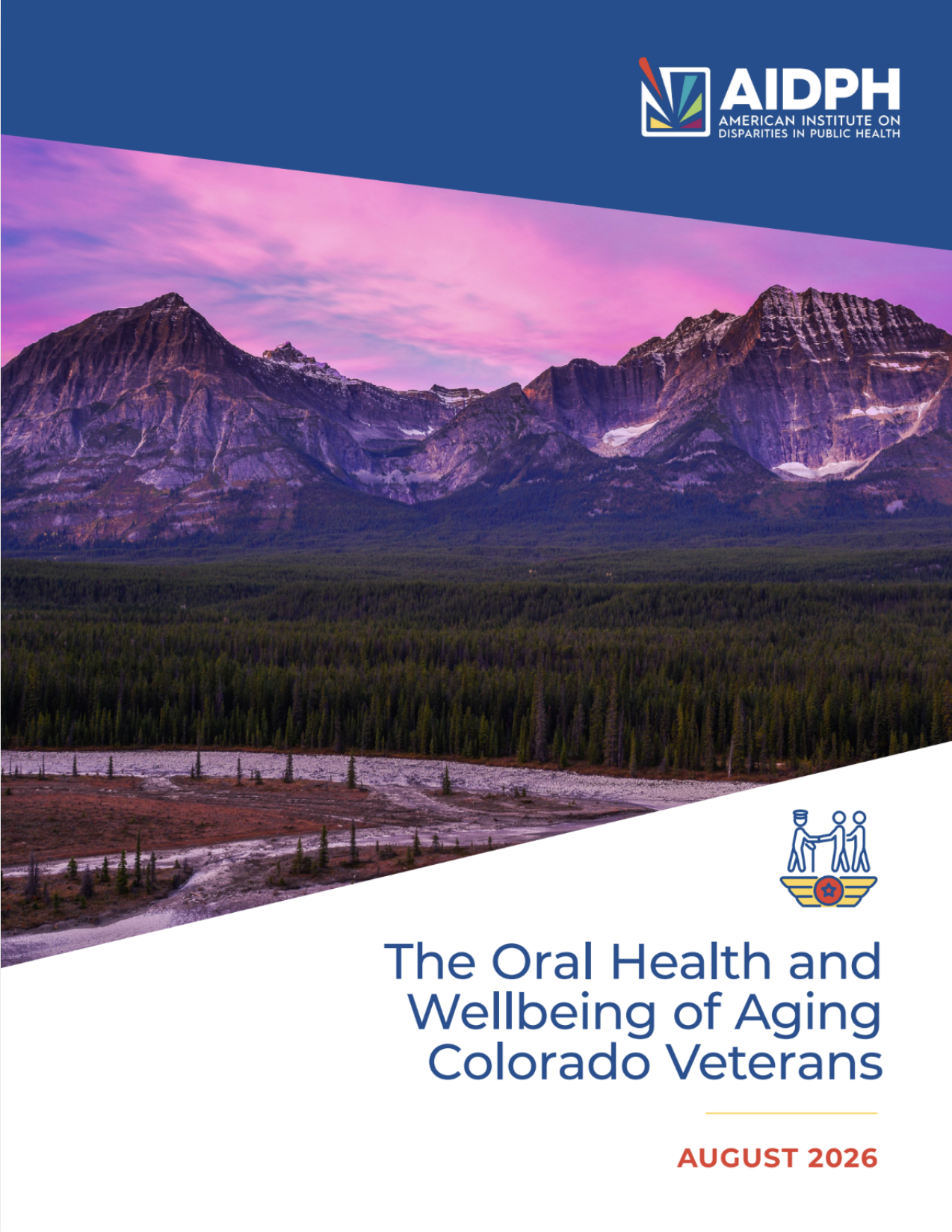
New Report on Aging Veterans in Colorado
Demographic and Socioeconomic Factors Associated with Oral Health-Related Quality of Life Among American Indian/Alaska Native Adults
Elevating Women in Public Health Leadershsip