Public Health Workforce
Supporting the Public Health Workforce to Address Critical Needs
Since our founding in 2015, AIDPH has supported educational programming, professional development, and research activities to support an equitable healthcare workforce. AIDPH believes that a robust workforce is essential to meeting the needs of underserved communities and that understanding infrastructure gaps enables us to identify solutions for clinicians and the patients they serve. Our research spans across all four of our communities of focus while also responding to emerging trends within the oral health workforce.
Workforce Highlight: Our Core Communities of Focus
AIDPH builds the capacity of the oral health and public health workforce to meet the needs of underserved communities, focusing on clinical excellence, cultural affirmation, and community-informed recommendations. While we specialize in working within our core communities of focus, we have developed a workforce framework for predoctoral students, residents, and current workforce practitioners that can be applied broadly to a variety of health disparities.
Evaluating Clinical Competence and Cultural Affirmation in Dental Education

ROOTED: Improving Opportunities for Rural Oral Health
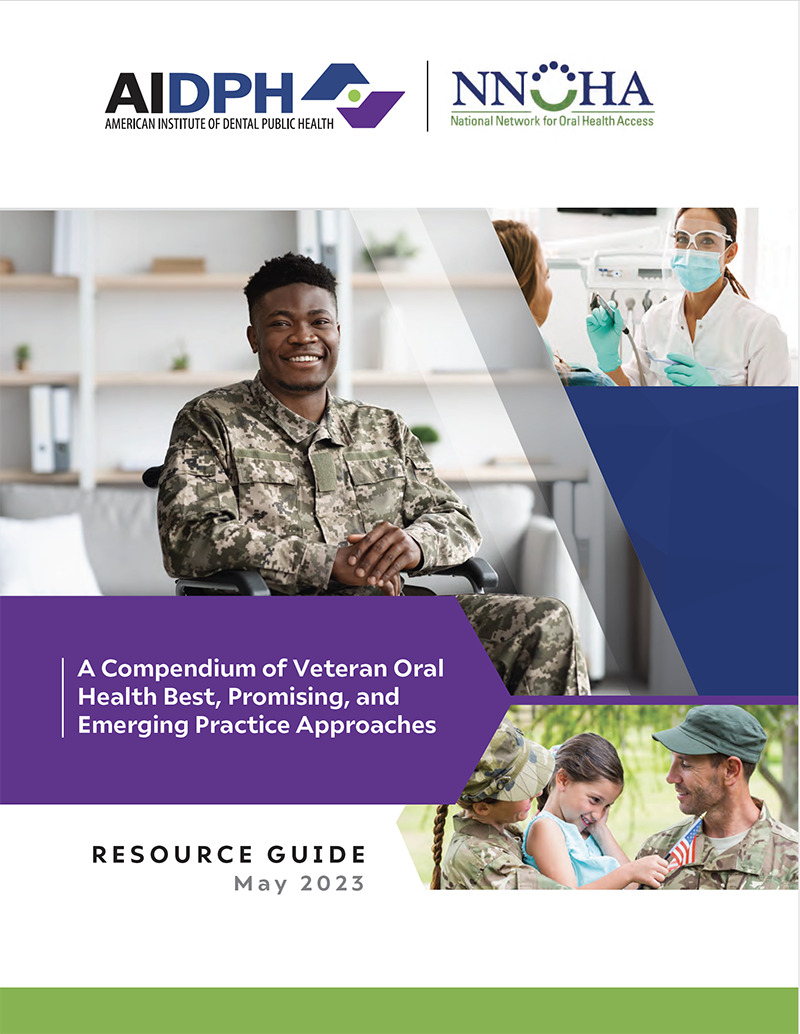
Improving Clinical Dental Care for US Veterans
Building Provider Confidence for Treating People with IDD
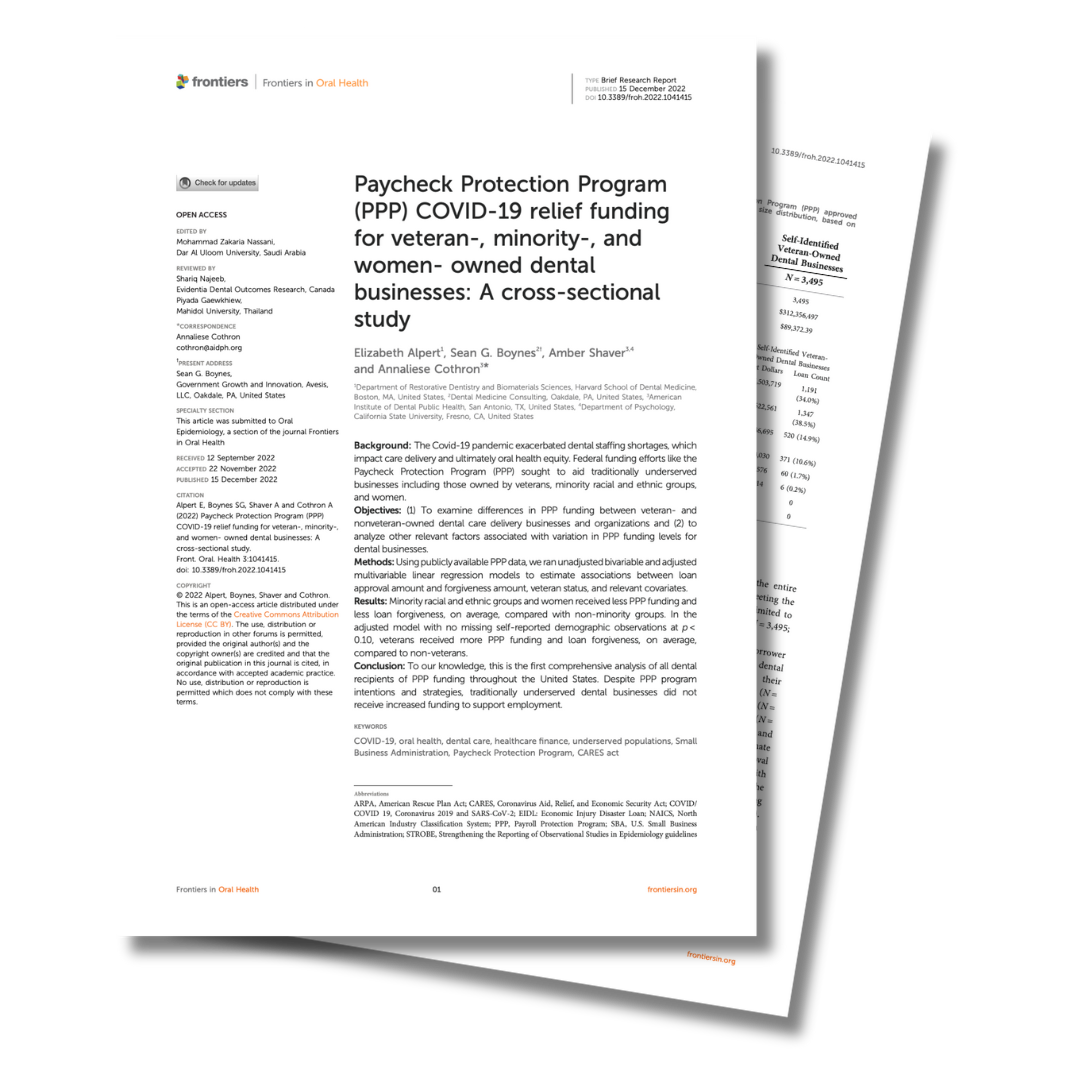
Evaluating PPP Funding for Minority-Owned Dental Offices
The Covid-19 pandemic exacerbated dental staffing shortages, which impact care delivery and ultimately oral health equity. Federal funding efforts like the Paycheck Protection Program (PPP) sought to aid traditionally underserved businesses including those owned by veterans, minority racial and ethnic groups, and women. In this publication, we examine the differences in PPP funding between veteran- and nonveteran- owned dental care delivery businesses and organizations. We also analyzed other relevant factors associated with variation in PPP funding for dental businesses besides veteran status.
Our key findings revealed:
- While there was not a significant difference, veteran-owned dental businesses received more PPP funding and had more forgiven than nonveteran-owned businesses.
- Compared with white-owned businesses, dental businesses owned by Asian, Black or African American, and Other racial groups both received less PPP funding and had smaller amounts forgiven.
- Hispanic and Latino-owned businesses were also given smaller amounts and had smaller amounts of loans forgiven, as were female-owned businesses.
The Financial and Policy Impacts of the COVID-19 Pandemic on US Dental Care Workers
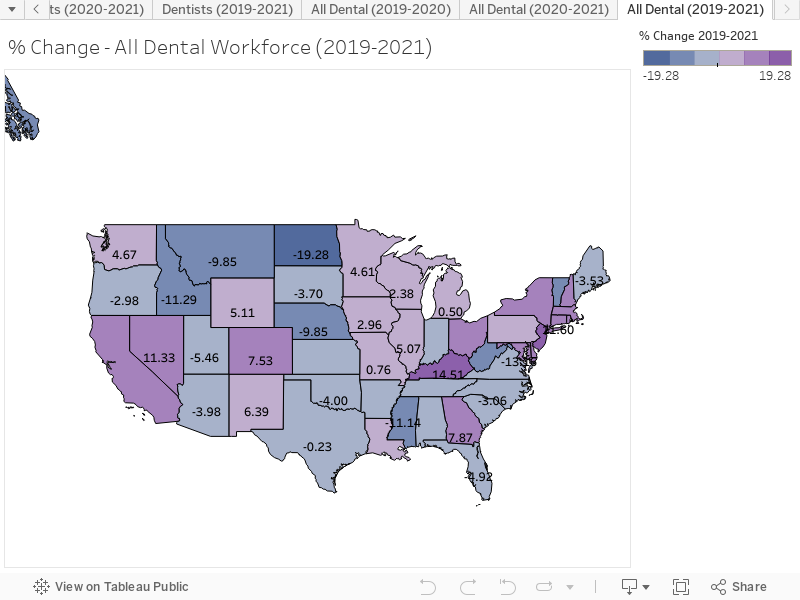
The shut down of dental clinics, coupled with patients fearing for their safety when clinics reopened, resulted in dental practitioners being furloughed or permanently unemployed. Now, two years later, the long-term impacts on the dental health care workforce can be examined. AIDPH used Bureau of Labor Statistics, Occupational Employment and Wage Statistics (OEWS) program survey results to:
- Evaluate trends and differences of the dental health care workforce before and after the onset of the COVID-19 pandemic.
- Assess the impact of dental health care worker (DHCW) shortages by state and geographic region.
Our key findings revealed:
- The dental workforce as a whole reduced by 3% from pre-pandemic levels.
- A $66.5M annual loss from state revenue impacts the flexibility of social services, creates budgeting shortfalls, and reduces economic growth in local communities.
Explore the Health Workforce Dashboard