Rural Communities
ROOTED: Rural Oral Health Outreach, Training, and Education in Dentistry
ROOTED is a national initiative that builds a sustainable, community-driven oral health workforce in rural America. The program supports predoctoral students, practicing clinicians, and oral health professionals through applied learning experiences, reinforcing rural identity as a professional asset and ensuring long-term access to dental care in underserved areas.
ROOTED addresses critical oral health workforce shortages by preparing the future and current oral health workforce to thrive in rural practice settings. Through culturally relevant, asset-based programming, ROOTED helps participants understand the unique strengths and challenges of rural communities and equips them with tools to lead, serve, and innovate.
ROOTED Seminar Series (Formerly ECHO)

Formerly the Rural Oral Health Project ECHO, the ROOTED Seminar Series is a virtual learning and collaboration space designed to build the capacity of oral health professionals who serve or support rural communities. Originally launched in 2020 under the nationally recognized Project ECHO® telementoring model, the series continues to follow a peer-to-peer, “all-teach, all-learn” approach that centers rural expertise, lived experience, and innovative care delivery.
Each session brings together a diverse group of clinicians, public health professionals, and thought leaders for dynamic, real-time discussions that explore the challenges and opportunities of rural oral health systems.
-
Expert Presentation: An exploration of rural topics from a subject matter expert (e.g., trauma-informed care, Medicaid navigation, teledentistry, workforce solutions).
-
Interactive Q&A: An open forum for participants to ask questions, share perspectives, and problem-solve collectively.
-
Applied Learning: A collaborative discussion that invites participants to reflect, ideate, and bring back actionable strategies to their own communities.
As ROOTED seminar series conclude each year, AIDPH offers asynchronous learning, continuing education, and program certificates from the AIDPH Academy. If you’re interested in earning a FREE certificate, sign up for the Academy.
2026 ROOTED Seminar Series: Rural Dental Care as a Human Right
August 2026: Caring for Appalachia's Most Vulnerable Population
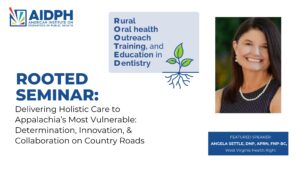 Our August ROOTED webinar series featured Dr. Angela Settle, CEO of West Virginia Health Right, who discussed caring for Appalachia’s most vulnerable population. As CEO of the state’s oldest and largest free and charitable clinic, Dr. Settle has devoted nearly three decades to serving Appalachia’s uninsured and underinsured population. Under her leadership, the clinic has grown to provide comprehensive medical, dental, vision, behavioral health, and recovery services to more than 46,500 patients annually. Dr. Settle has spearheaded innovative programs, including statewide mobile medical and dental units, a mobile street medicine initiative, and a mobile teaching kitchen that promotes “food as medicine.” Dr. Settle integrated behavioral health into primary care, expanded clinic sites, and launched workforce development programs, such as “Prepped to Serve Appalachia,” which trains individuals for careers in fine dining. During the COVID-19 pandemic, she led the state’s largest testing site and raised $12 million to double the East End clinic.
May 2026: Minimally Invasive Dentistry: Advancing Access Through Clinical & Public Health Integration
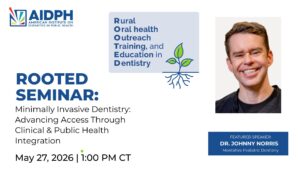
Our May ROOTED seminar featured Dr. Jonny Norris, who shared insights from his newly published work on innovative care delivery models designed to withstand real-world challenges, from Medicaid cuts to economic uncertainty.
Drawing on his experience building practices in both Oregon and New England, Dr. Norris walks through what makes these models different, why they work even under unstable conditions, and what they can teach us about consistently showing up for patients in rural and underserved communities.
March 2026: The Rural Health Transformation Fund: Implications for Access & Oral Health
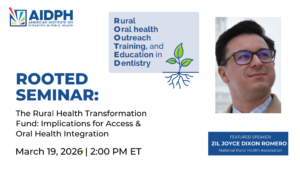 Join Senior State Government Affairs Manager Zil Joyce Dixon Romero from the National Rural Health Association (NRHA) on March 19, 2026, to discuss the Rural Health Transformation Fund, a federal policy initiative focused on supporting state-directed approaches to rural health system financing and delivery. Mr. Dixon Romero will provide an overview of the fund’s legislative context, structural framework, funding mechanisms, and current status.
2025 ROOTED Seminar Series: Rural Dental Care as a Human Right
December 11, 2025: Affirming Oral Health Models for LGBTQIA+ Patients
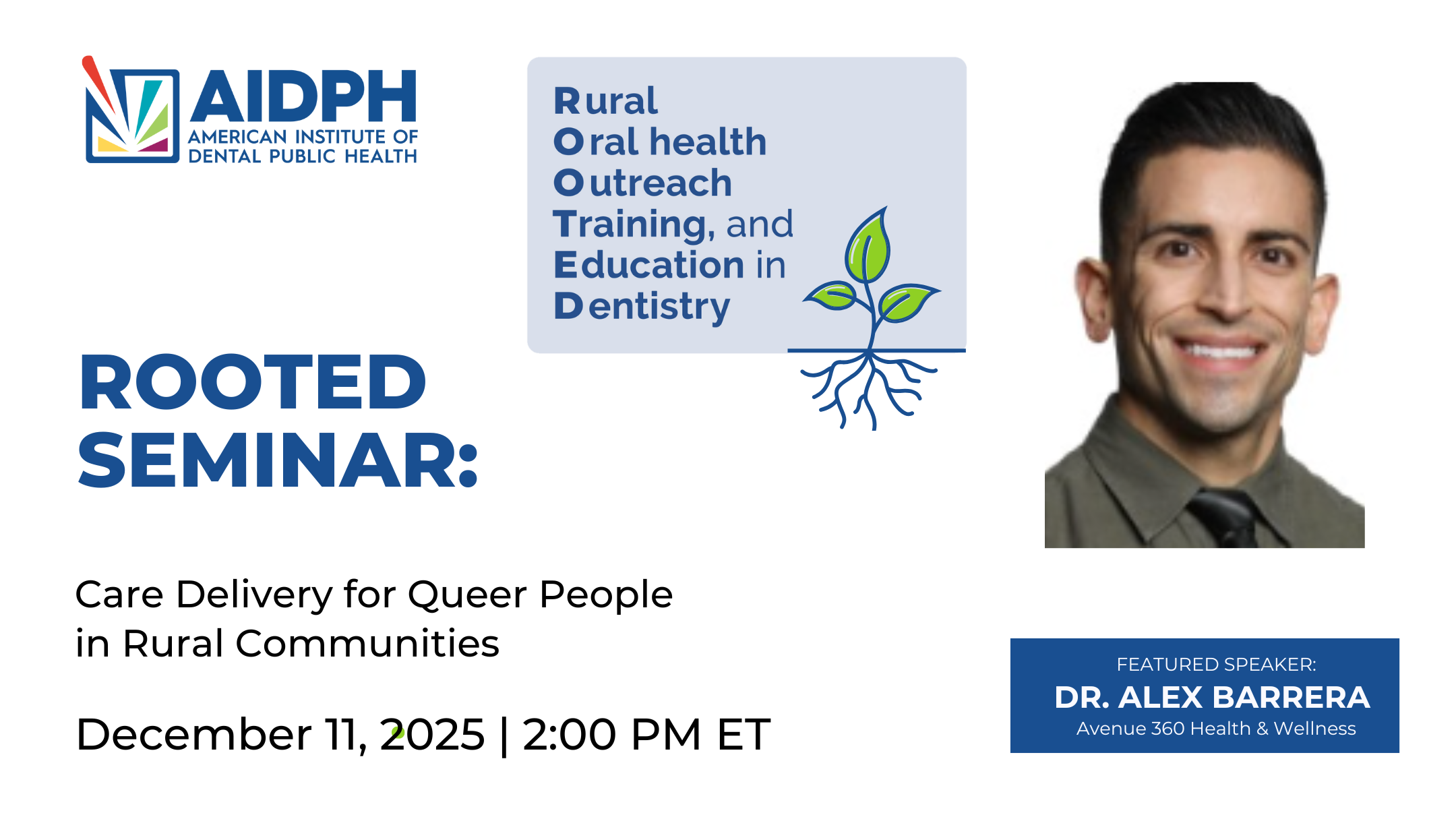 The LGBTQIA+ community faces a multitude of factors affecting their access to oral health care including discrimination, stigma, and a lack of education from dental professionals. This course will equip dental team members with skills to provide more affirming care for queer patients while also developing an understanding of the sociopolitical factors that play a role in the oral health disparities that this population faces. Presented by Dr. Alex Barrerra, Houston dentist, this session will focus on supporting queer people and their oral health with unique perspectives for living and delivering care in rural areas.
October 23, 2025: The Mobile Dental Care Model: Scaling Access to Care for Communities
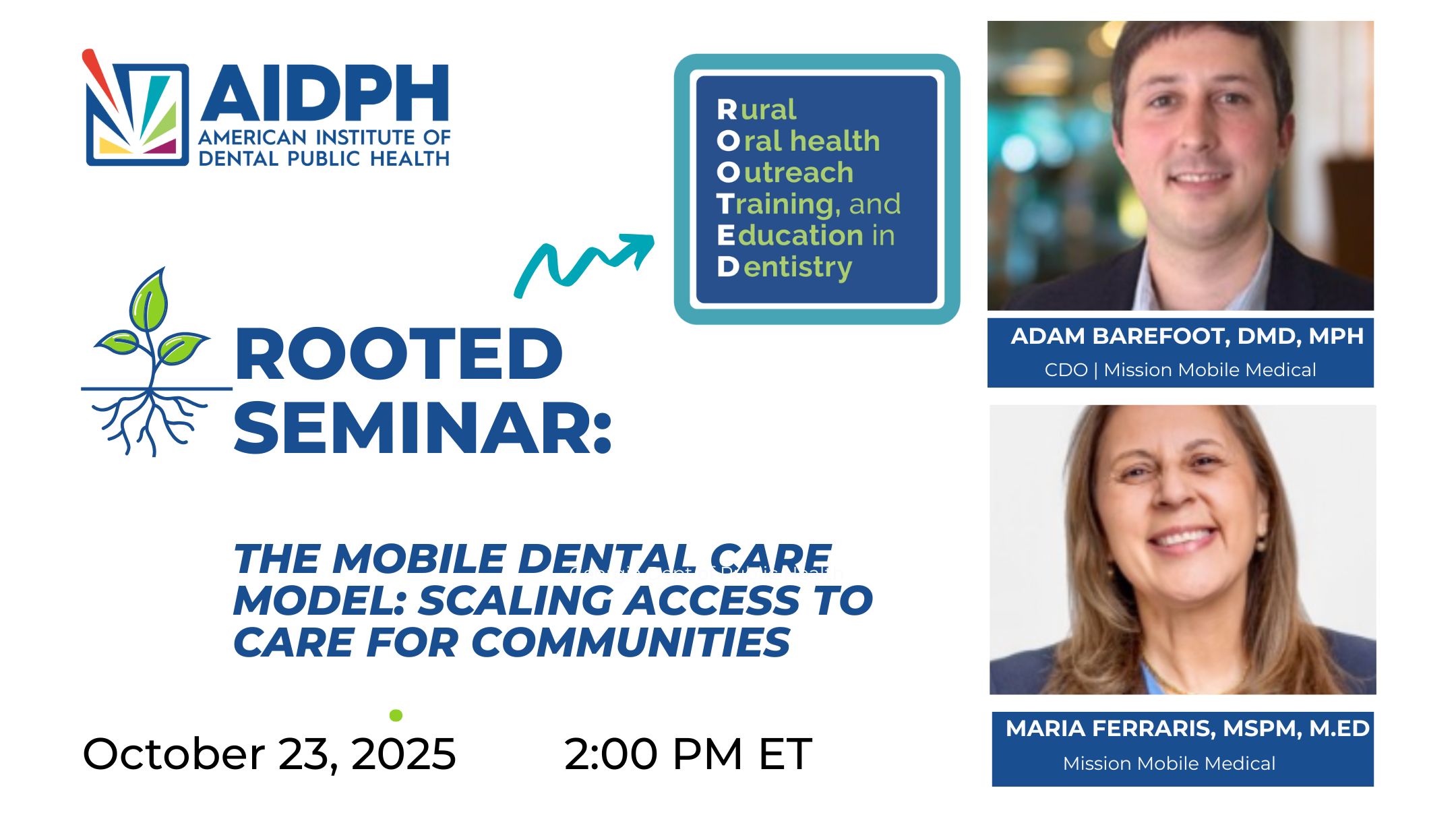 This interactive session will highlight innovative solutions for expanding oral health access in rural and historically marginalized communities. Guided by Dr. Adam Barefoot and Maria Ferraris, MSPM, MEd., the discussion will center on mobile dental care programs as a powerful strategy to strengthen the oral health safety net. Together, we will examine staffing, workflows, community partnerships, and sustainability, and share practical models adaptable across diverse organizations nationwide. Participants will engage in active dialogue to identify best practices and leave with actionable strategies to advance equity in oral health.
July 17, 2025: Access for All: Delivering Disability-Inclusive Dental Care in Rural Communities
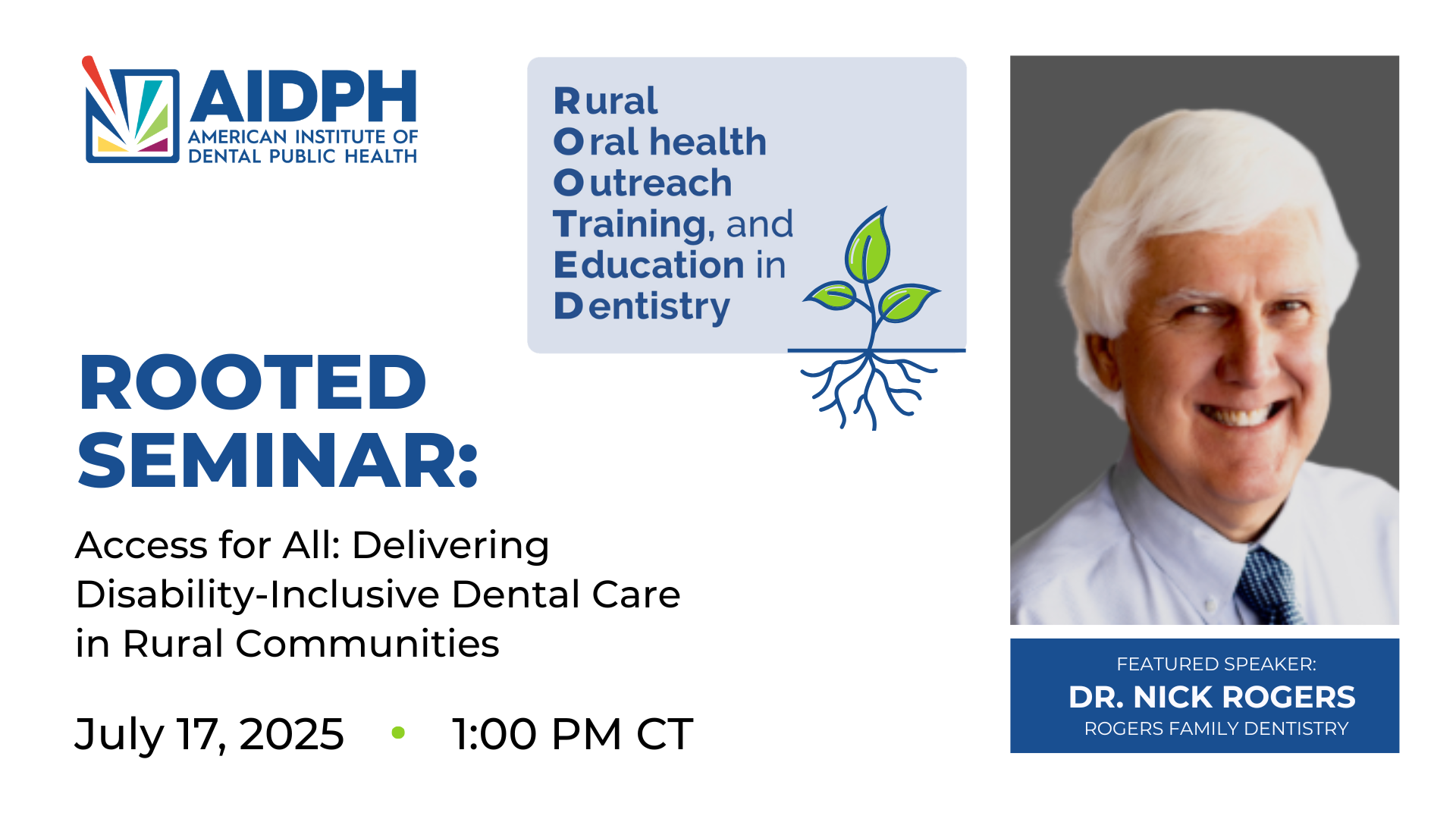 Dental Health is a Human Right features Dr. Nick Rogers, an accomplished rural dentist and leading advocate for patients with disabilities. Practicing in south central Kansas, Dr. Rogers brings deep, hands-on experience in meeting the complex oral health needs of underserved populations. In this session, he shares practical strategies and personal insights from years of providing inclusive, community-based care in a rural setting. This conversation will highlight how public health values can be translated into real-world impact – one community, at a time.
June 5, 2025: From Shortage to Solutions: Reimagining Oral Health Workforce Policy
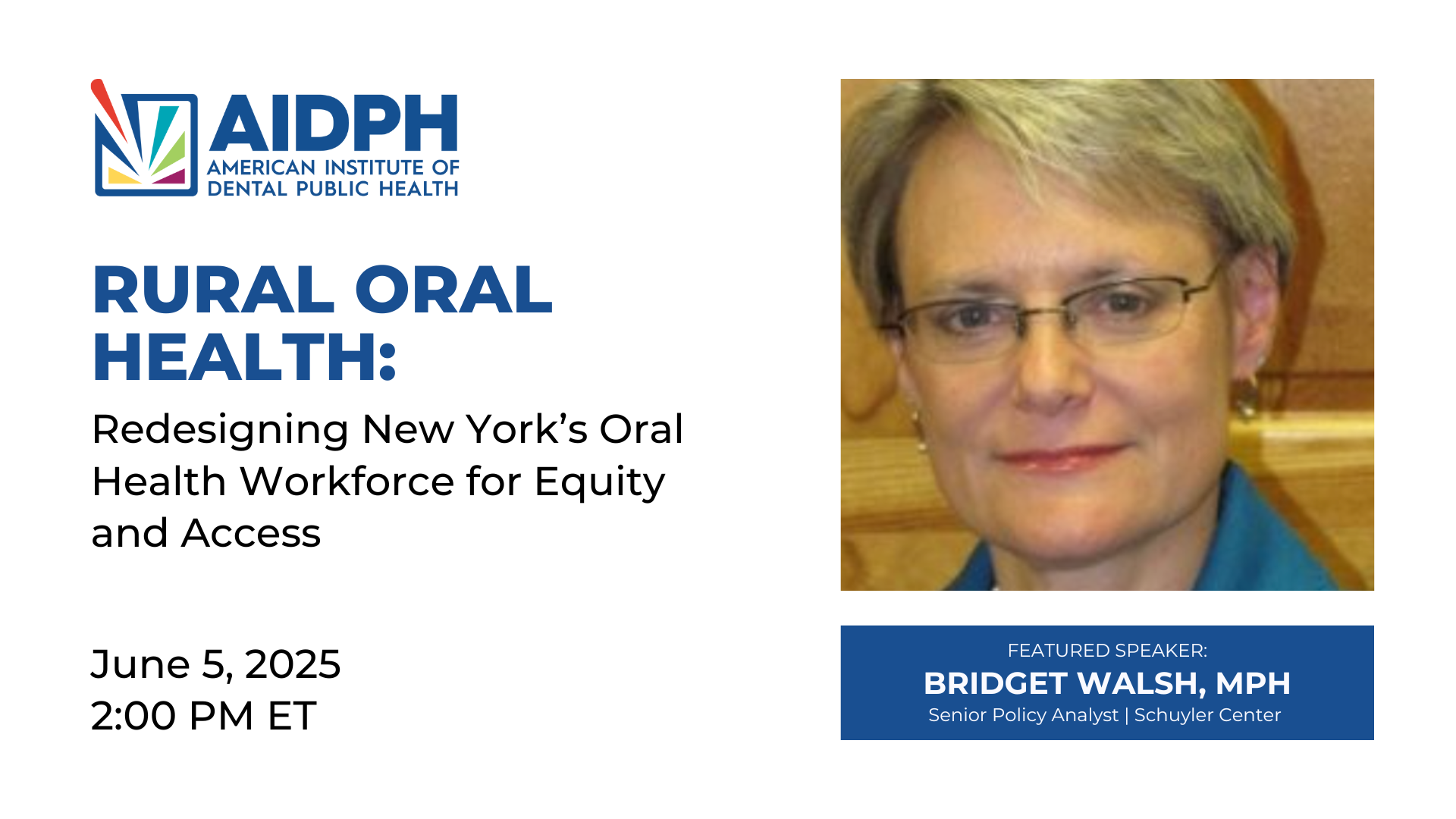 Access to oral health care remains a persistent challenge across rural and underserved communities, driven in part by workforce shortages and outdated policy structures. In this seminar, Bridget Walsh, MPH, Senior Policy Analyst at the Schuyler Center for Analysis and Advocacy, will present findings from the Center’s recent report, Redesigning New York’s Oral Health Workforce for Equity and Access. Attendees will explore actionable policy recommendations aimed at modernizing workforce pathways, expanding care access, and advancing health equity, with particular emphasis on the implications for rural communities. The session will highlight the intersection of policy, advocacy, and workforce development as tools for systemic change.
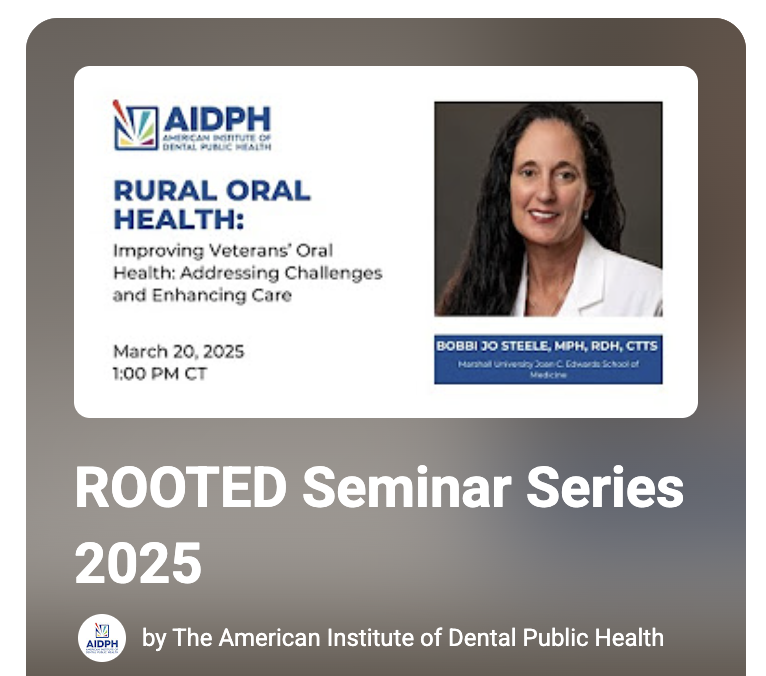
March 20th 2025-Beyond Service: Addressing Oral Health Barriers for Rural Veterans
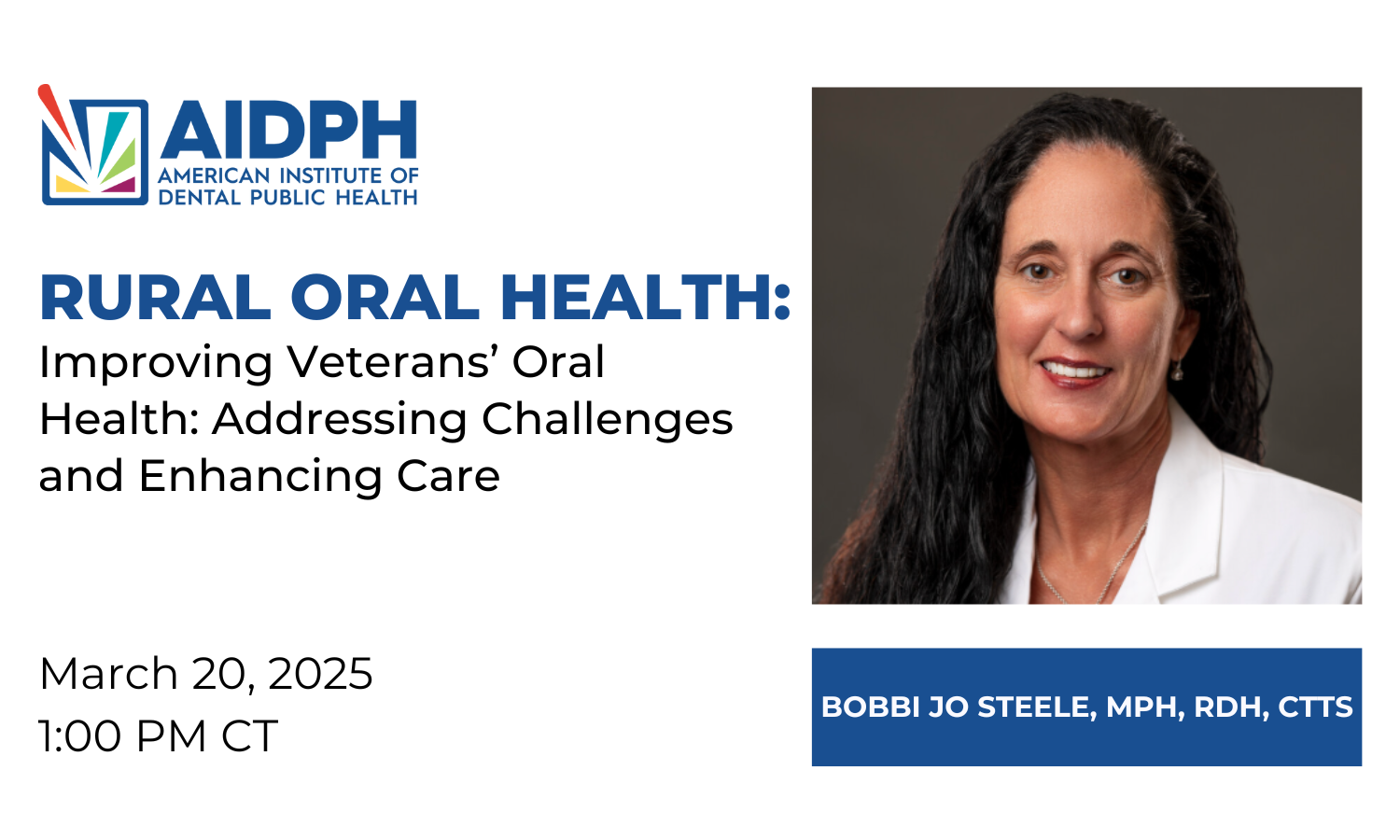 Veterans experience distinct challenges in maintaining oral health, including service-related injuries, limited access to dental care, and higher rates of tobacco use. These barriers are further intensified for those living in rural areas, where geographic isolation, provider shortages, and transportation difficulties create a double burden that limits access to necessary care. This session will examine the intersection of veteran oral health and rurality, identifying key barriers and discussing solutions tailored to this population. Attendees will explore trauma-informed care approaches, effective tobacco cessation strategies, and innovative ways to enhance access to dental services. Practical tools and techniques will be provided to empower dental professionals to improve the oral health experience for rural veterans, ensuring more equitable and effective care delivery. By the end of the session, participants will be equipped with actionable strategies to make a meaningful impact on veterans’ oral health outcomes in their communities.
2024 ROOTED Series: Navigating Rural and Tribal Oral Health Solutions
Your content goes here. Edit or remove this text inline or in the module Content settings. You can also style every aspect of this content in the module Design settings and even apply custom CSS to this text in the module Advanced settings.
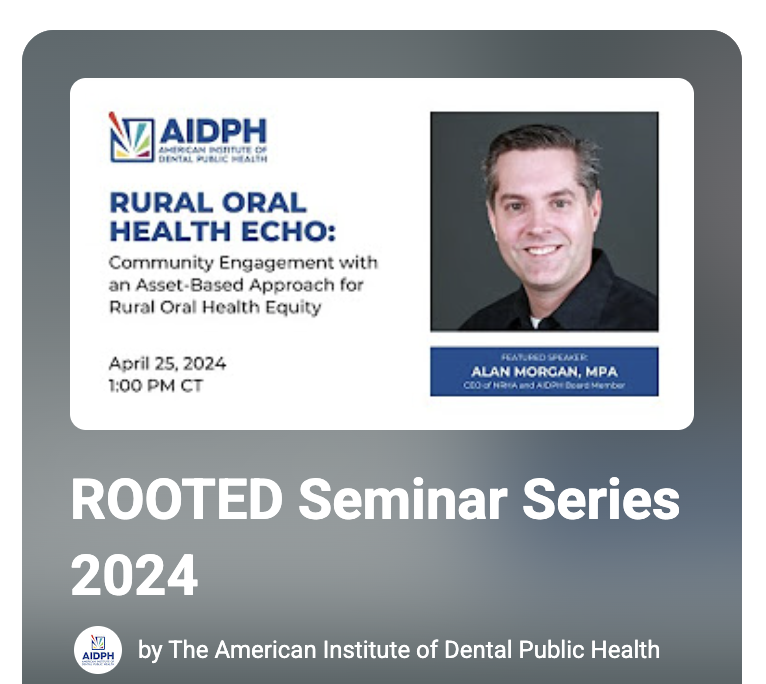
April 25: Community Engagement with an Asset-Based Approach for Rural Oral Health Equity
This first session features Alan Morgan, CEO of the National Rural Oral Health Association and AIDPH Board member. who will delve into an asset-based approach to community engagement for rural oral health access and equity. Alan, recognized as one of the top 100 most influential people in healthcare by Modern Healthcare Magazine, shared an asset-based approach to community engagement for rural oral health access and equity. Watch the recording to hear from this expert with over 33 years of experience in health policy at both state and federal levels!
Download the case recommendations.
June 27: Increasing Oral Health Access Through Innovative Programs
June 27, 2024 | 1:00 pm CT
During the second Rural Oral Health session of 2024, Monica McKee, MPH, BSDH, RDH, Vice President of Allied Services at the Oklahoma City Indian Clinic, presented on the unique concept of Integrated Dental Hygiene (I-RDH) and how the Clinic uses their I-RDH’s to enhance medical-dental integration and improve health outcomes. Through the didactic presentation and community discussion during this session, attendees gained insights into the role of I-RDHs in addressing oral health disparities and promoting oral-systemic health integration. Join us to explore the potential of integrated dental hygiene in fostering health equity and advancing oral healthcare delivery in rural communities.
August 29: Building a Diverse and Equitable Oral Health Workforce
The third session of our Rural Oral Health series featured Dr. Miranda Davis, a leading expert in dental public health, as she presented a seminar on Building a Diverse and Equitable Oral Health Workforce. With over 17 years of experience serving Tribal communities, Dr. Davis shared lessons from the successful Community Health Aide Program (CHAP) and its impact on expanding access to high-quality dental care. This session highlighted how CHAP’s innovative approach provides culturally responsive education, training, and certification for Dental Health Aides, creating new career pathways and bridging care gaps in underserved communities. Participants will be eligible for one free CEU while gaining valuable knowledge to support the development of an inclusive and effective oral health workforce.
November 14: Community Engaged Data Collection for Oral Health Justice
Featuring Dr. Gina Thornton-Evans, Director of the Division of Oral Health at the Centers for Disease Control and Prevention, our fourth Rural Oral Health seminar examined the role of community engagement and health justice in guiding data collection practices in oral health. Dr. Thornton-Evans shared insights from the CDC’s National Health and Nutrition Examination Survey (NHANES), offering participants an in-depth perspective on how health justice principles can shape equitable data collection processes that more accurately reflect diverse community needs. This session encouraged critical dialogue through a structured, interactive discussion, empowering participants to consider how to implement these approaches in their professional settings and how the data collected through NHANES is essential to advancing dental public health.
December 5: Rural Oral Health and Disability Communities
Rural Veterans: Research and Advocacy from AIDPH
After completing active duty service, nearly one-fourth of veterans, or about 4.7 million people, reside in rural areas. Generally, veterans are more highly concentrated in rural areas, with 8.5% residing in non-metropolitan areas versus 6.8% residing in urban areas nationally. AIDPH has created research that informs national advocacy for rural veterans and communities.

Read this foundational report from AIDPH and Carequest Institute for Oral Health on the oral health and wellbeing of veterans.

Rural veterans have more chronic disease conditions and poorer oral health compared to nonveterans and non-rural veterans.
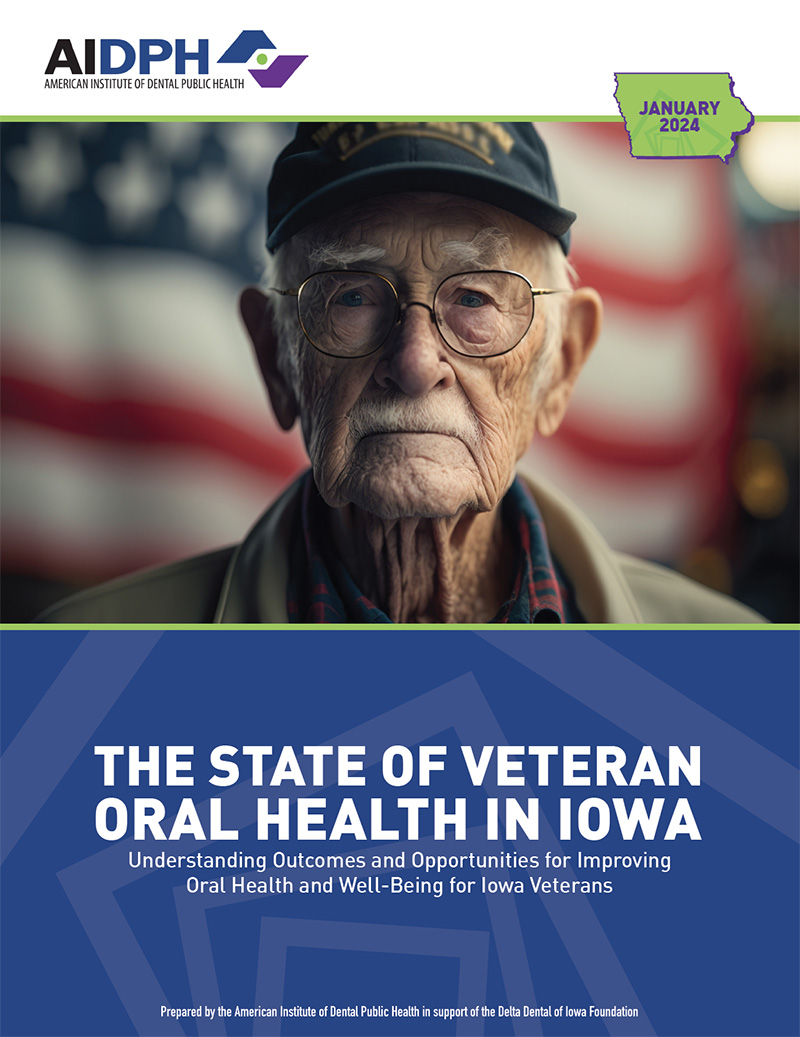
States can generate in-depth insights for rural veterans to inform interventions and strategic paths for improvement.
ROOTED Seminar Series Archive
AIDPH posts all of our ROOTED content on our YouTube channel for free access. If you’re interested in earning CEUs for ROOTED seminars, you can view sessions asynchronously and earn certificates via the AIDPH Academy.