
LGBTQIA+ Oral Health Week
Empowering the Oral Health Community for the Well-being of the LGBTQIA+ Community
Join AIDPH for our annual LGBTQIA+ Oral Health Week, October 13-16, 2026! (Our week’s activities kick off on Tuesday, as Monday is Indigenous Peoples’ Day.)
Drawing inspiration from our January 2026 publication in collaboration with CareQuest Institute for Oral Health, this year’s theme is “Queer Oral Health In All Health Policies.” If your organization would like to partner with us to amplify the goals of this campaign, please fill out our partner interest form here.
Tuesday
Inclusive and Integrated Queer Health in All Health Policies
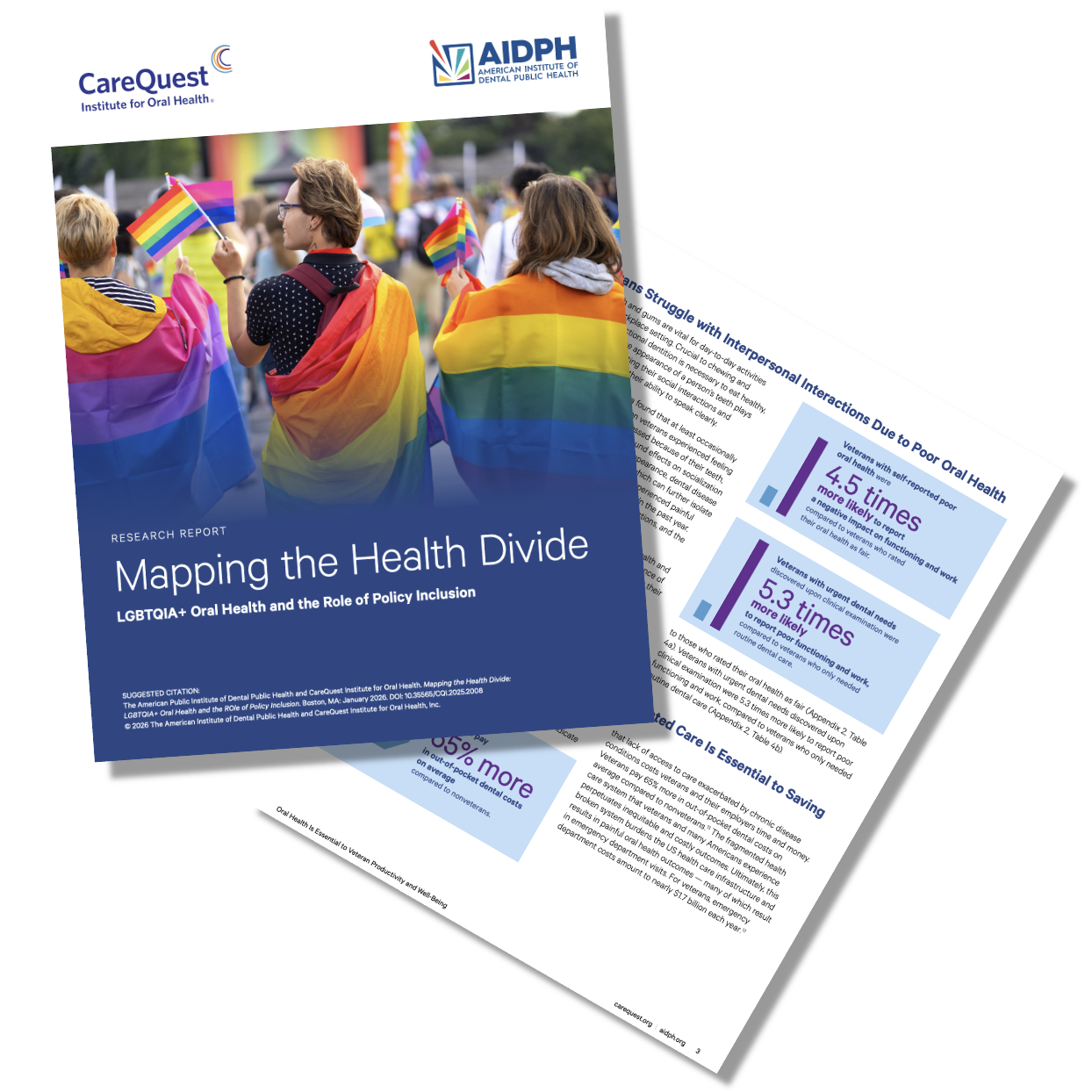
AIDPH will kick off the week by highlighting the January 2026 report we produced in partnership with CareQuest Institute for Oral Health, “Mapping the Health Divide: LGBTQIA+ Oral Health and the Role of Policy Inclusion.”
Wednesday
Leveraging Queer Data in All Health Policies
Collecting data in a culturally appropriate manner, in partnership with the queer community, ensures the results are connected to real outcomes.
Resource Spotlight
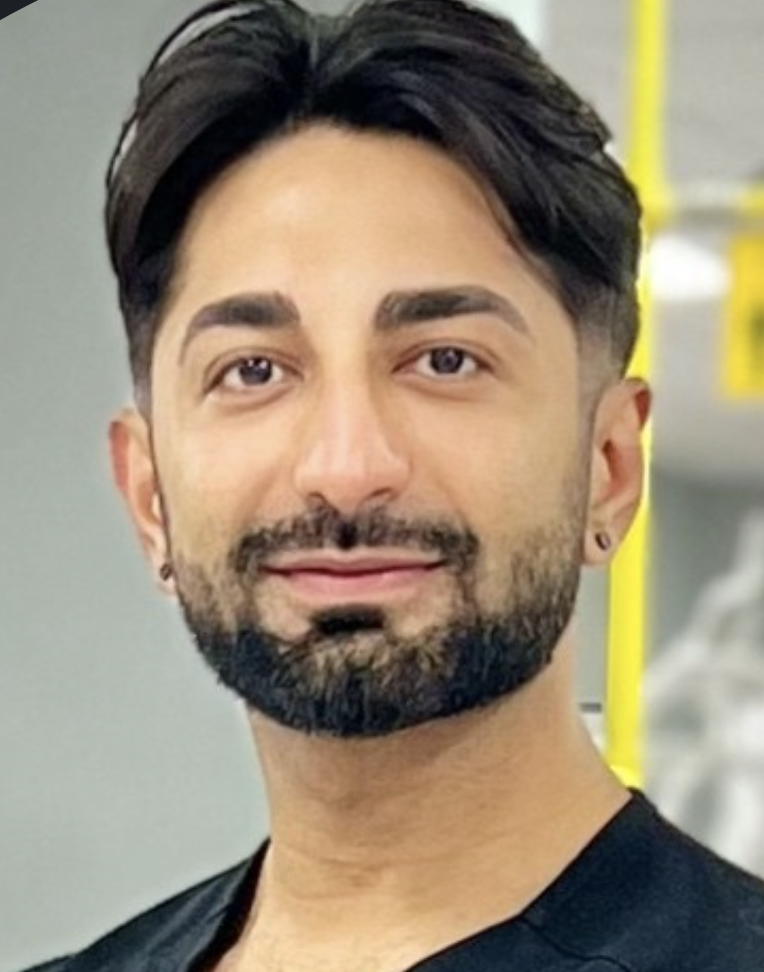
AIDPH Board Member Abbass Jessani published an article in the Journal of Dental Research highlighting the importance of inclusive practices in oral health research. The article states, “Oral health research often treats sex as a binary demographic variable, excluding sexual and gender minority individuals. There is a lack of meaningful integration of these variables across all phases of research, from proposal development and data collection to analysis and knowledge creation.” Read the full article here.
Thursday
All Queer Communities in All Health Policies
Community engagement is increasingly recognized as a cornerstone of effective health research, particularly for addressing health disparities and promoting health equity. Despite its importance, community-engaged research remains underutilized within oral health, and therefore, opportunities to inform interventions that are culturally responsive, sustainable, and attuned to the needs of underserved populations remain untapped. Following the feedback from our Oral Health Community Advisory Board, AIDPH created a national research agenda to address data gaps among our core communities of focus, including LGBTQIA+ people. Research highlights include:
- Most surveillance systems don’t assess LGBTQIA+ demographic questions and/or oral health questions, and how do we ask these questions more accurately?
- What are community-driven ways to collect information on sociodemographic and social determinants of health?
- Is cost always the biggest barrier to care across population groups? If not, what is?

Friday
Supporting Inclusive Education in All Health Policies
The lack of LGBTQIA+ inclusion in dental education not only affects clinical competence but also the educational climate for LGBTQIA+ students, faculty, and staff. To address gaps in evaluating queer inclusion and belonging in dental education, AIDPH conducted a three-part study culminating in strategic recommendations for dental education institutions. Review key findings of this report and explore how you can make policies in your educational institution more inclusive.
The University of North Carolina Adams School of Dentistry is showing what inclusion in action looks like. Founded in 2020 through student advocacy and supported by faculty leadership, the Pride Clinic is one of the few student-led dental clinics in the country offering free, affirming care for LGBTQIA+ patients. Read their story about clinical training and cultural affirmation. One way to show your commitment is by joining a directory, like OutCare, that connects patients with LGBTQIA+ affirming healthcare professionals. If you’re a provider, sign up today to ensure your practice is listed and ready to offer culturally competent care.
On the Blog
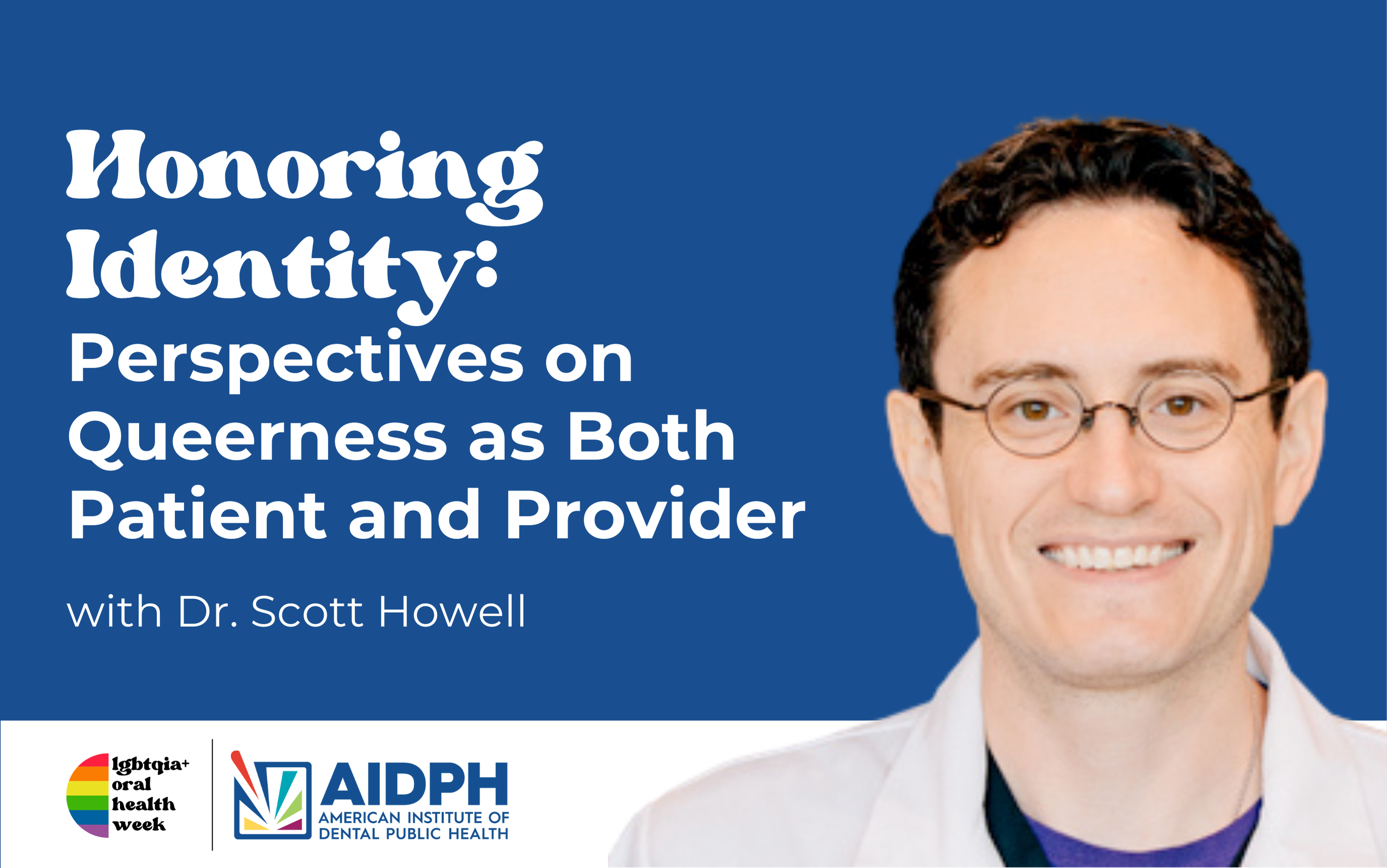
“Honoring Identity: Perspectives on Queerness as Both Patient and Provider” is a powerful reflection by AIDPH Board of Directors Vice-Chair, Dr. Scott Howell, on his experiences navigating healthcare as a queer patient and provider. In this post, he discusses the challenges of finding affirming care and the importance of creating safe spaces for LGBTQIA+ patients. Read more about how inclusivity can transform patient-provider relationships.

Success Spotlight
“A key factor in ending the oral health disparities seen in the LGBTQ+ community is to diversify the profession,” says Dr. Alex Barrera, the Director of Dental Services at Avenue 360 Health and Wellness, a Federally Qualified Health Center (FQHC) in Houston, Texas. Dr. Barrera is advancing LGBTQ+ oral health by amplifying community voices through focus groups, involving community members in board meetings, and collaborating with dental schools to develop inclusive curricula and provide hands-on training for future providers.
Commit to LGBTQIA+ Oral Health Equity
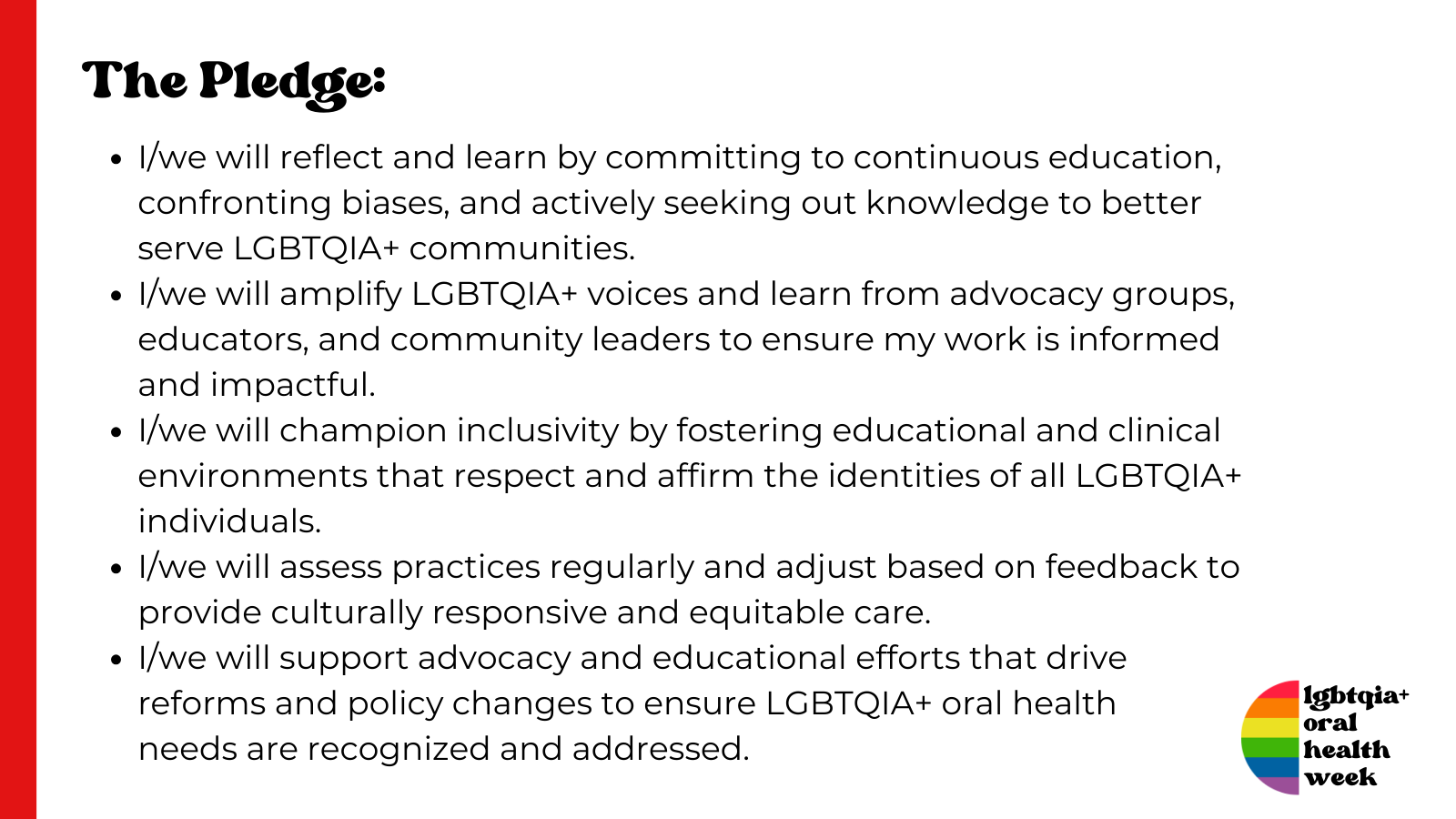
We invite oral health professionals to join us in pledging their commitment to equitable care. Sign our pledge to become active accomplices in pursuit of inclusive, respectful, and high-quality care for LGBTQIA+ individuals. By signing the pledge, we can keep you informed about this year’s campaign and other LGBTQIA+ oral health initiatives.
You can access a comprehensive list of all resources we shared this week here.
Thank You to Our 2026 Partners!
Frequently Asked Questions
Why was LGBTQIA+ Oral Health Week formed? What does sexual orientation or gender identity have to do with dentistry?
Although the connection between dentistry and LGBTQIA+ issues may not appear obvious at first glance, a growing body of research reveals that LGBTQIA+ individuals unfortunately face significant barriers to dental health access when compared to the broader patient population. They visit dentists less often, are statistically more likely to report worsened oral health outcomes, and report facing greater medical mistreatment and malpractice. Additionally, LGBTQIA+ patients may have unique oral health concerns to take into account, such as the potential impacts of hormone replacement therapy on dental care. AIDPH started our annual LGBTQIA+ Oral Health Week in order to raise awareness for these issues, offer practical tools, research and guides, and open conversations on how we can improve dental outcomes for people of all sexual and gender identities. Read the AIDPH blog to learn more about the connections between LGBTQIA+ individuals and dentistry.
Why focus on the LGBTQIA+ community over other minority groups which face dental health disparities?
AIDPH believes there’s value specifically in providing a depth of knowledge about our four core community focus groups – LGBTQIA+, rural communities, people with disabilities, and veterans – rather than taking a “jack of all trades, master of none” approach to awareness and advocacy. These four specific communities reflect the research backgrounds, professional interests, and lived experiences of our members. By homing in on the communities our organization has existing knowledge, expertise, and a body of knowledge, we can provide more targeted solutions and more comprehensive discussions in our content and publications, ultimately providing better value and insight for our followers.
With that being said, AIDPH is still interested in using its platform to promote the work of compelling organizations doing important dental health causes that may fall outside of our core focus groups, especially those with an intersectional focus. We invite you to send resources you’re interested in promoting related to specific issues in dental representation by contacting communication@aidph.org.
In addition, we’d love to see more awareness weeks from expert organizations for other marginalized populations in dentistry!
How would you know a patient identifies as LGBTQIA+?
You can’t tell a patient is LGBTQIA+ just by looking at them. However, having an underlying background knowledge in LGBTQIA+ best-practices and inclusive language can help significantly improve patient experiences by reducing potential misunderstandings and microaggressions. Furthermore, considering that LGBTQIA+ people are less likely to visit a dentist, and are more likely to let dental issues go untreated, signaling to potential patients that your practice is tolerant and accepting can help patients feel more comfortable and welcome in your practice, encouraging greater visitation and retention.
As a profession, shouldn’t dentistry avoid picking political sides? Why are you pushing an agenda?
Treating patients with dignity and respect is not “pushing a political agenda” — it is a basic and fundamental job responsibility required to be an effective healthcare provider. That means everyone, regardless of your personal opinions about how they express themselves and who they love. And, considering that according to some estimates, they make up nearly 8% of the adult population in the U.S., LGBTQIA+ individuals will inevitably make up a notable portion of most dental patient populations.
Even still, to say that AIDPH’s initiatives are solely for one political party would be factually incorrect. AIDPH has never promoted one particular affiliation over another, and has, since its conception, worked towards finding solutions to dental public health issues from Republicans, Democrats, and Independents alike through programs such as our Federal Service Immersion.
With all this in mind, AIDPH still feels it is important to recognize the political structures in place that keep oppressed groups from accessing the dental health care they need. By raising awareness to major issues, we can encourage open conversations that incorporate perspectives from across the political aisle.
When will the next LGBTQIA+ Oral Health Week occur?
LGBTQIA+ Oral Health Week takes place during the second or third week of October every year in recognition of LGBT History Month. We look forward to your participation next year!
What benefits can my organization see from partnering with AIDPH on LGBTQIA+ Oral Health Week?
By participating in AIDPH’s LGBTQIA+ Oral Health Week, you’ll gain a valuable platform to signal your organization as a supportive, forward-thinking changemaker while providing your constituents with practical and insightful tools, information, and content on pressing issues in LGBTQIA+ dentistry. Additionally, AIDPH will use its own platform to promote your organization, thereby positioning yourselves as an industry thought leader to our targeted audience of dental health professionals. More information on tier-by-tier partnership benefits will be available in our 2026 Partnership Toolkit, to be released during late summer/early fall of next year.
How can I participate next year?
We’d love for you to join us as a partner in next year’s LGBTQIA+ Oral Health Week! Our 2026 Interest Form (including tiers of participation) and Pledge will be available during late summer/early fall of next year. Fill out the form, sign the pledge, and a member of our team will reach out with more information on how to get involved.